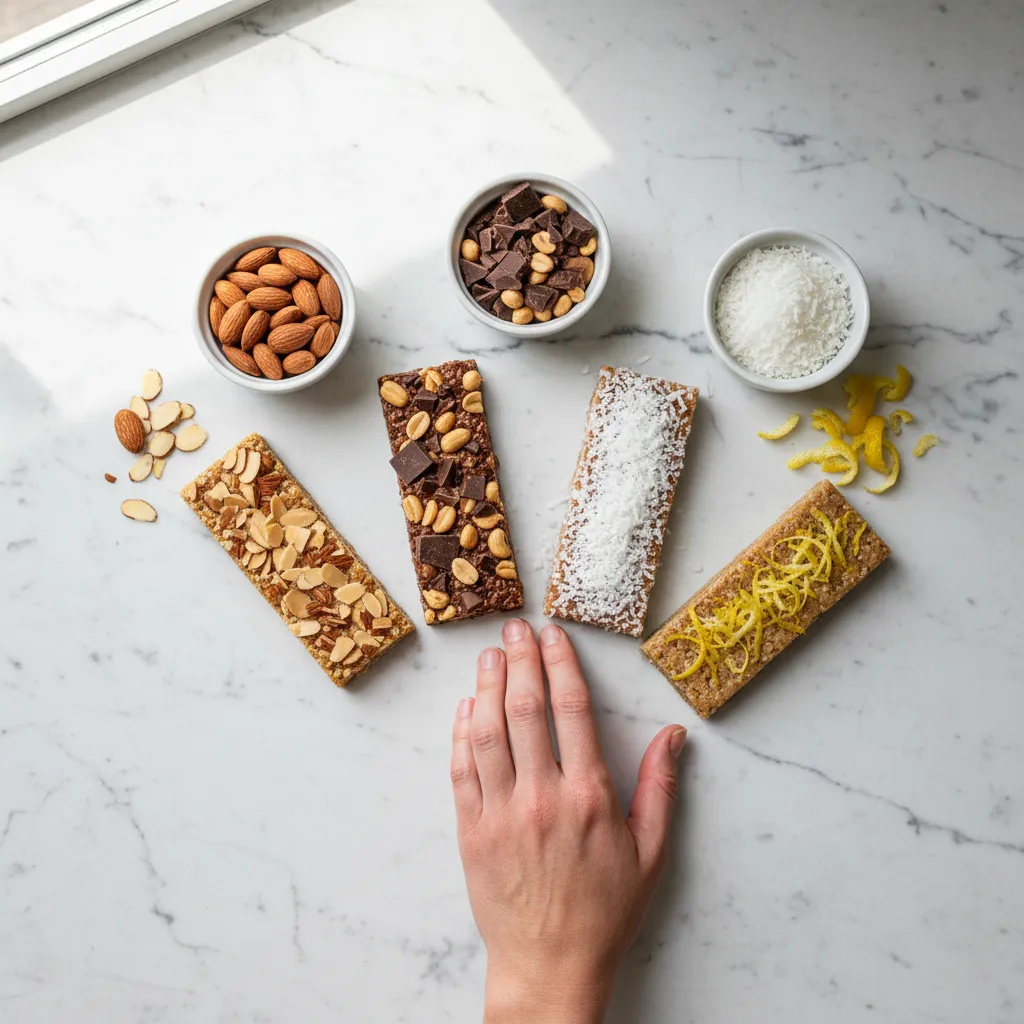

Images are for illustrative purposes only and do not represent the actual product. These are not official Herbalife product photos.
Herbalife Protein Bars: Ingredients, Nutrition Facts, and Flavors
Everything you need to know about Herbalife Protein Bars — ingredients, nutritional profile, available flavors, how they compare to other bars, and how to use them in your daily nutrition plan.
What Is in Herbalife Protein Bars?
Herbalife Protein Bars are formulated to deliver a balanced nutritional profile in a convenient, great-tasting format. Every ingredient serves a specific purpose — providing protein for muscle support, fiber for satiety, and controlled carbohydrates for energy without excess sugar.
Protein Sources
- Soy protein isolate — a complete protein containing all nine essential amino acids. Soy protein isolate is one of the highest-quality plant-based proteins available, with a Protein Digestibility Corrected Amino Acid Score (PDCAAS) of 1.0 — the highest possible rating
- Milk protein — provides both whey and casein proteins. Whey is rapidly absorbed for immediate amino acid delivery, while casein digests slowly for sustained protein release
- Collagen hydrolysate — supports connective tissue health and contributes to the bar's satisfying texture
Fiber
- Chicory root fiber (inulin) — a prebiotic fiber that supports digestive health, feeds beneficial gut bacteria, and contributes to the feeling of fullness after eating
- Soluble corn fiber — an additional fiber source that helps moderate blood sugar response and adds to the bar's total fiber content
Carbohydrates and Sweeteners
- Glycerine — a sugar alcohol that provides sweetness and moisture while contributing fewer calories than traditional sugar
- Maltitol syrup — a low-glycemic sweetener that provides sweetness without the rapid blood sugar spike of regular sugar
- Cocoa and chocolate coatings — provide rich flavor in chocolate varieties, contributing natural antioxidants from cocoa
Fats
- Palm kernel oil and palm oil — used in the chocolate coating for texture and stability
- Soy lecithin — an emulsifier that maintains the bar's smooth texture and prevents separation of ingredients
Vitamins and Minerals
Herbalife Protein Bars are fortified with a range of micronutrients to ensure that your snack contributes to your daily vitamin and mineral needs rather than just providing empty calories.
Nutritional Profile Per Bar
Each Herbalife Protein Bar provides approximately:
- Calories: 140 kcal
- Protein: 10g
- Total carbohydrates: 16g
- Sugar: 8g
- Fiber: 3g
- Total fat: 5g
- Saturated fat: 3.5g
- Sodium: 100mg
For comparison with common snack options:
- Standard chocolate bar (40g): 200+ kcal, 2-3g protein, 20-25g sugar
- Granola bar (35g): 140-180 kcal, 2-4g protein, 10-15g sugar
- Bag of chips (30g): 150-160 kcal, 2g protein, 15g fat, minimal fiber
- Herbalife Protein Bar: 140 kcal, 10g protein, 8g sugar, 3g fiber
The difference is clear: Herbalife Protein Bars deliver 3 to 5 times more protein than conventional snacks while keeping calories and sugar lower. The 3g of fiber further supports satiety, making the bar more satisfying than its calorie count alone would suggest.
Available Flavors
Herbalife Protein Bars come in several indulgent flavors designed to satisfy cravings while delivering balanced nutrition:
Vanilla Almond
- Light, creamy vanilla flavor with almond pieces for crunch
- A versatile, crowd-pleasing option that pairs well with coffee or tea
- Popular among people who prefer milder, less sweet flavors
Chocolate Peanut
- Rich chocolate coating with peanut flavor and a satisfying chewy texture
- The most indulgent-tasting option — often compared to a candy bar but with far better nutrition
- A favorite for satisfying afternoon chocolate cravings
Citrus Lemon
- Refreshing citrus flavor with a light, tangy profile
- A unique option for those who prefer fruity flavors over chocolate
- Especially popular in warmer months as a lighter-tasting snack
Chocolate Coconut
- Dark chocolate coating with shredded coconut and a tropical note
- Rich, decadent flavor that feels like a treat rather than a health food
- Great for coconut lovers who want a dessert-like snack experience
All flavors share the same core nutritional profile — the protein, calorie, and fiber content remains consistent across varieties. Choose based entirely on taste preference.
The Science Behind Protein Snacking
Why Protein Controls Appetite
Protein is the most satiating macronutrient. Research from the American Journal of Clinical Nutrition demonstrates that protein increases satiety hormones (peptide YY and GLP-1) while reducing the hunger hormone ghrelin. This means a 140-calorie protein bar keeps you fuller longer than a 200-calorie carbohydrate-heavy snack.
The Thermic Effect
Protein has a higher thermic effect than carbohydrates or fat — your body uses approximately 20-30% of protein calories just for digestion and absorption, compared to 5-10% for carbohydrates and 0-3% for fat. This means a portion of the protein calories in every bar are used by the digestive process itself.
Blood Sugar Stability
The combination of protein, fiber, and low-glycemic sweeteners in Herbalife Protein Bars produces a moderate, sustained blood sugar response rather than the sharp spike and crash associated with high-sugar snacks. This is particularly important for sustained energy and concentration during work or study.
Muscle Protein Synthesis
Distributing protein intake throughout the day — including snack times — supports ongoing muscle protein synthesis more effectively than consuming all protein at dinner. The Herbalife Nutrition Advisory Board recommends spreading protein across meals and snacks, with 10-20g per eating occasion as a practical target.
How to Use Herbalife Protein Bars in Your Daily Routine
Mid-Morning Snack (10:00-11:00)
- Bridges the gap between breakfast and lunch
- Prevents the energy dip that leads to poor lunch choices
- Pair with water or herbal tea for optimal hydration
Afternoon Pick-Me-Up (14:00-16:00)
- Replaces the common habit of reaching for coffee and sweets
- Sustains energy through the afternoon without caffeine dependency
- Keeps you satisfied until dinner without overeating
Pre-Workout Fuel (30-60 Minutes Before Exercise)
- Provides readily available protein and carbohydrates for training
- Light enough to avoid stomach discomfort during exercise
- More convenient than preparing a pre-workout meal
Post-Workout Recovery Snack
- Delivers protein when muscles are most receptive to amino acids
- Convenient when you cannot prepare a full post-workout meal immediately
- Pair with a Herbalife24 shake for a more complete recovery protocol
Travel and On-the-Go
- No refrigeration needed — stays fresh in your bag, car, or desk
- Consistent nutrition regardless of where you are
- Eliminates the need to rely on airport food, gas station snacks, or skipping meals entirely
How Do Herbalife Protein Bars Compare to Other Bars?
Herbalife Protein Bars occupy a specific position in the market — balanced nutrition in a genuinely great-tasting format:
- Versus high-protein bars (20-30g protein) — those bars are designed as meal replacements with 250+ calories. Herbalife Protein Bars are positioned as snacks — lower calorie, moderate protein, meant to complement meals rather than replace them
- Versus granola and cereal bars — most granola bars contain 2-4g of protein and 10-15g of sugar. Herbalife bars deliver 3-5x the protein with less sugar
- Versus candy bars — similar indulgent taste but with 10g of protein, 3g of fiber, and significantly less sugar
- Versus homemade protein balls — Herbalife bars offer consistent nutrition per serving, longer shelf life, and no preparation time
- Versus raw/natural bars — date-based bars are often marketed as healthy but can contain 15-20g of sugar from dried fruit. Herbalife bars provide a more controlled sugar profile
The key advantage is balance — enough protein to make a difference, enough flavor to enjoy, and controlled enough calories to fit within any nutrition plan.
Quality and Manufacturing Standards
Herbalife Protein Bars are produced under the same rigorous quality standards that govern all Herbalife Nutrition products:
- Formulated by the Herbalife Nutrition Advisory Board — a team of over 40 scientists and nutrition experts
- GMP-certified manufacturing — Good Manufacturing Practices ensure consistency, purity, and safety across every production batch
- Full ingredient transparency — every ingredient is listed, with clear nutritional information per bar
- Tested for quality — raw materials and finished products undergo testing to verify label accuracy and ingredient purity
Frequently Asked Questions
Are Herbalife Protein Bars suitable for vegetarians?
Yes. The protein sources include soy protein isolate and milk protein, both of which are vegetarian-friendly. However, they are not vegan as they contain milk-derived ingredients. Check the specific product label for your region, as formulations may vary by market.
Can I eat Herbalife Protein Bars if I have food allergies?
Herbalife Protein Bars contain soy, milk, and may contain peanuts, tree nuts, and gluten depending on the flavor. Always check the ingredient list and allergen warnings on the specific product packaging for your region. If you have severe allergies, consult the full ingredient list before consumption.
How many protein bars should I eat per day?
One to two bars per day is typical, used as snacks between meals. They are designed to supplement a balanced diet — not replace meals. If you are using Herbalife Formula 1 shakes as part of your nutrition plan, one protein bar per day as a snack is usually sufficient.
Do I need to refrigerate Herbalife Protein Bars?
No. Herbalife Protein Bars are shelf-stable and do not require refrigeration. Store them in a cool, dry place. In very hot conditions, the chocolate coating may soften but the nutritional value is unaffected. Many people prefer to keep a few bars at room temperature in their bag, desk, or car for convenient access.
Can children eat Herbalife Protein Bars?
Herbalife Protein Bars are formulated for adults. While they contain no harmful ingredients for children, the protein and calorie content is designed for adult nutritional needs. For children and adolescents, consult a pediatrician or nutritionist before adding protein supplements to their diet.
How do Herbalife Protein Bars fit into a weight management plan?
They replace high-calorie, low-nutrient snacks with a controlled-calorie, high-protein alternative. By keeping you fuller longer and reducing the temptation to overeat, they support calorie control naturally. Use them as snacks between meals — not as additional food on top of your regular eating pattern.