

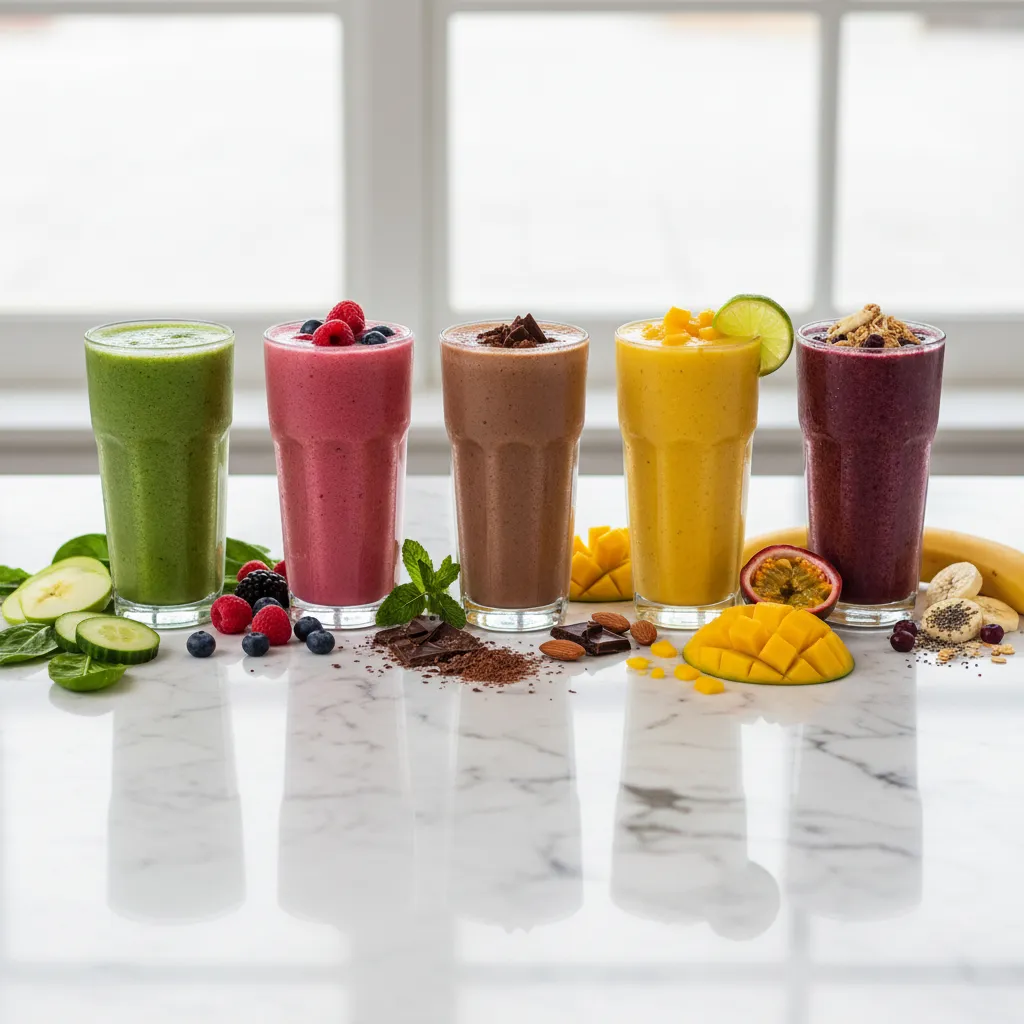
10 Smoothie Recipes for Every Goal: Energy, Weight Loss, Muscle, and More
From energizing morning blends to post-workout recovery shakes — 10 simple smoothie recipes tailored to your health and fitness goals.
Why Smoothies Work
Smoothies are one of the simplest ways to pack a complete meal's worth of nutrition into a single glass. Unlike juicing, which strips out fiber, blending retains the whole fruit or vegetable — giving you fiber, vitamins, minerals, and phytonutrients in a form your body can absorb quickly.
A well-built smoothie can serve as a full meal replacement, a post-workout recovery drink, or a nutrient-dense snack — depending on what you put in it. The key is knowing which ingredients to combine for your specific goal.
The formula for a balanced smoothie:
- Protein source (20-30g) — protein powder, Greek yogurt, silken tofu, or cottage cheese
- Healthy fat (5-15g) — nut butter, avocado, chia seeds, or flaxseed
- Carbohydrate — fruit (fresh or frozen), oats, or sweet potato
- Liquid base (200-300ml) — milk, plant milk, water, or coconut water
- Optional boosters — spinach, greens, cinnamon, turmeric, cocoa
Below are 10 recipes organized by goal. Each takes under 5 minutes to prepare.
For Energy
1. Morning Kickstart Green Smoothie
This is the smoothie to replace your sugary cereal or skipped breakfast. The combination of protein, healthy fats, and slow-releasing carbs keeps your energy stable for 3-4 hours.
Ingredients:
- 1 cup fresh spinach (mild flavor, packed with iron and magnesium)
- 1 medium banana (frozen for thickness)
- 1 tablespoon almond butter
- 1 scoop vanilla protein powder (or 150g Greek yogurt)
- 250ml unsweetened almond milk
- 1 teaspoon honey (optional)
- 3-4 ice cubes
Nutrition estimate: ~320 calories, 22g protein, 35g carbs, 12g fat
Why it works: Spinach provides iron for oxygen transport, banana gives quick energy plus potassium, almond butter adds sustained fats, and protein prevents the mid-morning crash.
2. Coffee Protein Power Blend
For those who need their morning coffee and breakfast in one glass. The caffeine from coffee combined with protein creates sustained alertness without jitters.
Ingredients:
- 1 shot espresso or 120ml strong brewed coffee (cooled)
- 1 medium banana (frozen)
- 1 scoop chocolate protein powder
- 1 tablespoon peanut butter
- 200ml milk or oat milk
- Pinch of cinnamon
- 3-4 ice cubes
Nutrition estimate: ~350 calories, 25g protein, 38g carbs, 11g fat
Why it works: Coffee provides 80-100mg of caffeine for mental alertness, the protein and fat slow caffeine absorption for a smoother energy curve, and cinnamon helps regulate blood sugar.
For Weight Loss
3. High-Protein Satiety Shake
This shake maximizes protein and fiber while keeping calories under 300 — the two factors that research consistently shows reduce overall calorie intake throughout the day.
Ingredients:
- 1 scoop vanilla protein powder
- 100g frozen mixed berries (strawberries, blueberries, raspberries)
- 1 tablespoon ground flaxseed (fiber + omega-3s)
- 250ml unsweetened almond milk (30-40 calories vs 120 for dairy)
- 1/2 cup fresh spinach
- 3-4 ice cubes
Nutrition estimate: ~250 calories, 24g protein, 22g carbs, 8g fat, 7g fiber
Why it works: High protein (24g) triggers satiety hormones. Berries are low-calorie but high in fiber and antioxidants. Flaxseed adds fiber that slows digestion. This shake keeps you full for 3-4 hours while staying well under a typical meal's calorie count.
4. Tropical Green Detox Smoothie
Light, refreshing, and nutrient-dense without feeling like you're on a diet. The greens provide volume and micronutrients with minimal calories.
Ingredients:
- 1 cup fresh spinach
- 1/2 cup frozen mango chunks
- 1/2 cup frozen pineapple chunks
- 1/2 medium cucumber (peeled)
- Juice of 1/2 lime
- 1 scoop unflavored or vanilla protein powder
- 250ml coconut water
- Small piece of fresh ginger (optional, supports digestion)
Nutrition estimate: ~270 calories, 20g protein, 40g carbs, 3g fat
Why it works: Cucumber and spinach add bulk without calories. Mango and pineapple provide natural sweetness and digestive enzymes. Coconut water hydrates with natural electrolytes. Ginger has thermogenic properties that may support metabolism.
For Muscle Building
5. Mass Builder Chocolate Shake
Designed for post-workout or as a calorie-dense meal for people trying to gain lean muscle. Higher in calories and protein than the weight loss options.
Ingredients:
- 1.5 scoops chocolate protein powder
- 1 large banana
- 2 tablespoons rolled oats
- 1 tablespoon peanut butter
- 300ml whole milk
- 1 tablespoon cocoa powder
- 3-4 ice cubes
Nutrition estimate: ~520 calories, 38g protein, 58g carbs, 16g fat
Why it works: 38g of protein supports muscle protein synthesis (research suggests 20-40g per meal is the optimal range). Oats and banana provide complex and simple carbs to replenish glycogen. Whole milk adds calories and additional protein. The higher calorie count ensures a surplus for muscle growth.
6. Berry Recovery Shake
A post-workout recovery smoothie that prioritizes the 3:1 carb-to-protein ratio that research suggests is optimal for glycogen replenishment and muscle repair.
Ingredients:
- 1 scoop vanilla protein powder
- 1 cup frozen mixed berries
- 1 medium banana
- 150g Greek yogurt (adds 10g extra protein)
- 200ml milk
- 1 tablespoon honey
- 3-4 ice cubes
Nutrition estimate: ~450 calories, 32g protein, 65g carbs, 6g fat
Why it works: The carb-to-protein ratio accelerates recovery. Berries provide antioxidants that reduce exercise-induced inflammation. Greek yogurt adds casein protein, which digests slowly and supports muscle repair over several hours. Best consumed within 30-60 minutes after training.
For Digestive Health
7. Gut-Friendly Banana Ginger Smoothie
This smoothie supports digestive comfort and gut health through ingredients known for their soothing and prebiotic properties.
Ingredients:
- 1 medium banana (frozen)
- 150g plain kefir or Greek yogurt (probiotics)
- 1 tablespoon chia seeds (soaked for 10 minutes if possible)
- 1 teaspoon fresh ginger (grated)
- 1/2 teaspoon turmeric powder
- 200ml oat milk
- 1 scoop vanilla protein powder
- Small pinch of black pepper (enhances turmeric absorption)
Nutrition estimate: ~350 calories, 25g protein, 42g carbs, 10g fat
Why it works: Kefir provides live probiotics for gut microbiome support. Chia seeds are a prebiotic fiber source that feeds beneficial gut bacteria. Ginger has clinically demonstrated anti-nausea and digestive-soothing properties. Turmeric's curcumin has anti-inflammatory effects that support gut lining health.
8. Papaya Aloe Digestive Blend
A tropical smoothie that combines natural digestive enzymes with soothing ingredients.
Ingredients:
- 1 cup ripe papaya (fresh or frozen)
- 1/2 medium banana
- 1 tablespoon aloe vera juice or gel (food-grade)
- 1 scoop vanilla protein powder
- 200ml coconut milk (light)
- Juice of 1/2 lime
- Fresh mint leaves (3-4 leaves)
- 3-4 ice cubes
Nutrition estimate: ~290 calories, 21g protein, 38g carbs, 6g fat
Why it works: Papaya contains papain, a natural enzyme that aids protein digestion. Aloe vera has been used for centuries to soothe the digestive tract and support nutrient absorption. Coconut milk is gentle on the stomach, and mint naturally relieves digestive discomfort.
For Overall Wellness
9. Antioxidant Berry Blast
A nutrient-dense smoothie focused on maximizing vitamin and antioxidant intake — ideal for immune support, skin health, and healthy aging.
Ingredients:
- 1/2 cup frozen blueberries (highest antioxidant content of common fruits)
- 1/2 cup frozen acai or mixed berries
- 1 cup fresh kale or spinach
- 1 scoop protein powder (vanilla or unflavored)
- 1 tablespoon ground flaxseed
- 250ml pomegranate juice (100% juice, no added sugar) or water
- 3-4 ice cubes
Nutrition estimate: ~310 calories, 22g protein, 40g carbs, 7g fat
Why it works: Blueberries and acai are among the highest-ORAC (antioxidant capacity) foods available. Kale adds vitamins A, C, and K. Flaxseed provides omega-3 fatty acids. Pomegranate juice adds additional polyphenols linked to cardiovascular and skin health in multiple studies.
10. Golden Milk Recovery Smoothie
Inspired by traditional golden milk (turmeric latte), this smoothie combines anti-inflammatory spices with balanced macros for recovery and relaxation.
Ingredients:
- 1 medium banana (frozen)
- 1 scoop vanilla protein powder
- 1/2 teaspoon turmeric powder
- 1/4 teaspoon cinnamon
- Small pinch of black pepper
- 1 tablespoon almond butter
- 250ml oat milk or warm milk
- 1 teaspoon maple syrup (optional)
- 3-4 ice cubes (omit if using warm milk)
Nutrition estimate: ~360 calories, 24g protein, 42g carbs, 12g fat
Why it works: Turmeric's curcumin is a potent anti-inflammatory compound — black pepper increases its bioavailability by up to 2,000%. Cinnamon supports blood sugar regulation. Almond butter adds healthy fats and vitamin E. This is an excellent evening smoothie for recovery and relaxation.
How to Build Your Own Smoothie
Once you understand the formula, you can create endless variations.
Step 1: Choose your protein (20-30g)
- Protein powder (whey, casein, plant-based, or a meal replacement shake)
- Greek yogurt (150g = ~15g protein)
- Silken tofu (150g = ~8g protein)
- Cottage cheese (100g = ~11g protein)
Step 2: Choose your fruit (1-2 servings)
- Banana (creaminess + potassium)
- Berries (low-calorie + high antioxidant)
- Mango (tropical sweetness + vitamin A)
- Peach or pear (mild flavor + fiber)
Step 3: Choose your liquid (200-300ml)
- Milk or plant milk (calories + creaminess)
- Water or coconut water (lowest calorie)
- Coffee (energy boost)
Step 4: Choose your fat (1 tablespoon)
- Nut butter (protein + healthy fats)
- Avocado (creaminess + monounsaturated fats)
- Chia or flaxseed (omega-3s + fiber)
Step 5: Optional boosters
- Spinach or kale (micronutrients without affecting taste)
- Ginger or turmeric (anti-inflammatory)
- Cocoa powder (antioxidants + chocolate flavor)
- Oats (complex carbs + fiber)
Pro tip: Freeze your fruits. Frozen fruit creates a thicker, creamier texture without needing as much ice, and frozen produce is often picked at peak ripeness and flash-frozen, retaining more nutrients than fresh produce that's traveled long distances.
Frequently Asked Questions
Can a smoothie replace a full meal?
Yes, if it contains adequate protein (20-30g), healthy fats, carbohydrates, and ideally a serving of vegetables. A smoothie made with just fruit and juice is a snack, not a meal — it lacks protein and fat, leading to a blood sugar spike and crash. A properly built smoothie with protein powder or Greek yogurt, nut butter, and fruit can provide the same nutritional value as a plated meal in a more convenient format.
Should I use fresh or frozen fruit?
Both work well. Frozen fruit is often more nutritious because it's picked at peak ripeness and flash-frozen, preserving vitamins and antioxidants. It also creates a thicker, colder smoothie without diluting with ice. Fresh fruit works perfectly when it's in season and ripe. The best approach: buy fresh when in season, freeze what you don't use within a few days.
Are smoothies good for weight loss?
Smoothies can support weight loss when designed correctly — high protein, moderate calories, and good fiber content. The risk comes from smoothies that are essentially desserts: large portions with multiple fruits, juice bases, honey, and granola toppings that push calories above 500-600. Stick to the high-protein satiety formulas above and use water or unsweetened plant milk as your base.
When is the best time to drink a smoothie?
It depends on your goal. For energy, drink one at breakfast. For muscle recovery, drink within 30-60 minutes after exercise. For weight management, use one as a meal replacement for whichever meal you're most likely to make poor choices at (often lunch or a late dinner). There's no single "best" time — the best time is whenever it helps you consistently hit your nutritional goals.
How long can I store a smoothie?
Freshly blended smoothies are best consumed immediately — oxidation begins breaking down nutrients within 15-20 minutes of blending. If you must prepare ahead, store in an airtight container in the refrigerator for up to 24 hours. Add a squeeze of lemon juice to slow oxidation. Shake well before drinking, as separation is normal. For meal prep, freeze smoothie ingredients in individual bags and blend fresh each morning — it takes under 3 minutes.