

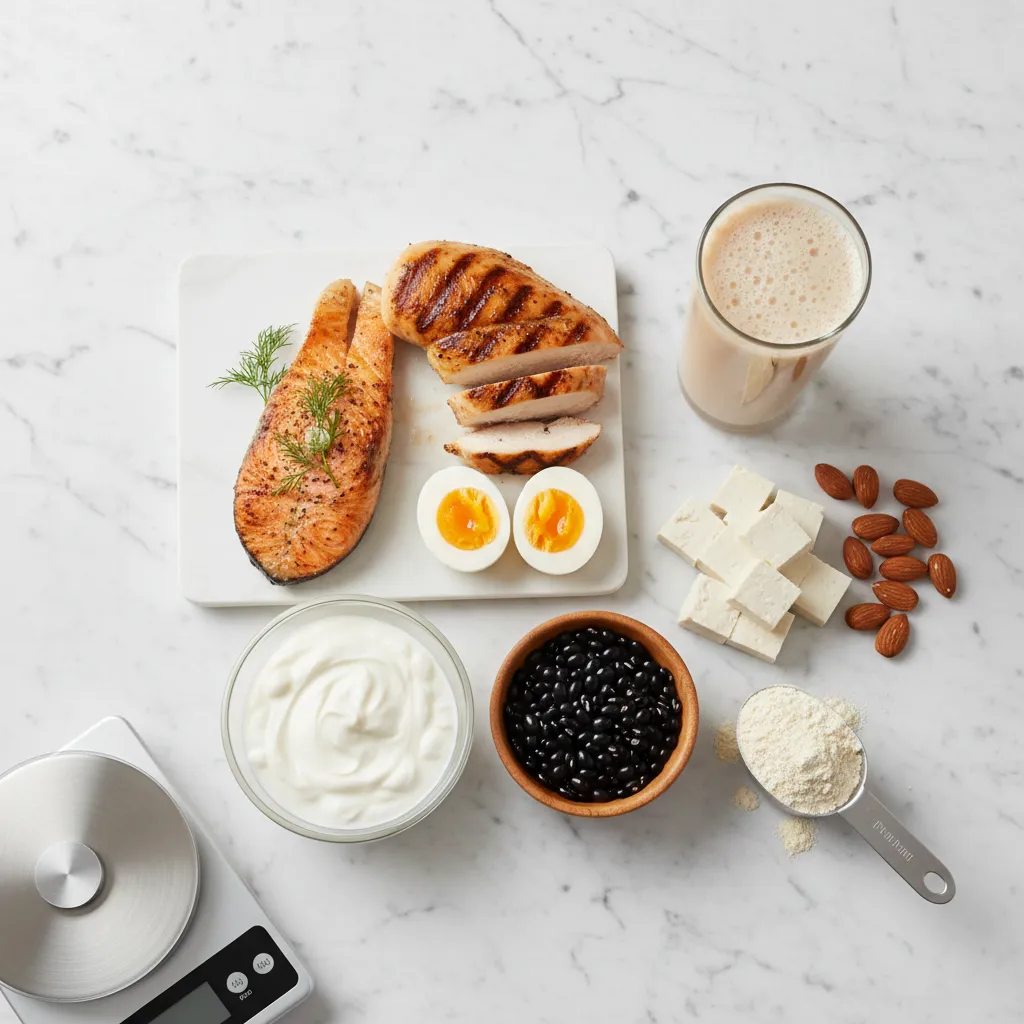
How Much Protein Do You Really Need Per Day? A Science-Based Guide
Find out exactly how much protein you need daily based on your age, activity level, and goals — with practical tips to reach your target.
How Much Protein Do You Actually Need?
The short answer: most healthy adults need between 0.8 and 2.0 grams of protein per kilogram of body weight per day, depending on activity level and goals.
If you're sedentary, the Recommended Dietary Allowance (RDA) set by the National Academy of Medicine is 0.8g per kilogram of body weight — roughly 56g daily for a 70kg (154 lb) person. But if you exercise regularly, that number climbs significantly. Research published in the Journal of the International Society of Sports Nutrition suggests active individuals benefit from 1.2 to 2.0g per kilogram per day.
Here's a quick reference based on body weight of 70kg (154 lb):
- Sedentary adult — approximately 56g per day
- Moderately active — approximately 84-112g per day
- Endurance athlete — approximately 84-126g per day
- Strength training — approximately 112-140g per day
These are evidence-based ranges, not one-size-fits-all rules. Your ideal intake depends on your age, body composition, health status, and personal goals. When in doubt, a registered dietitian or healthcare provider can help you determine the right amount for your situation.
Why Protein Matters Beyond Building Muscle
Protein tends to get associated exclusively with gym culture and bodybuilding, but its role in your body goes far beyond muscle. Every cell in your body contains protein, and it's involved in processes most people never think about.
Key functions of dietary protein:
- Satiety and appetite control — protein is the most satiating macronutrient. A 2015 study in the American Journal of Clinical Nutrition found that increasing protein intake to 30% of total calories significantly reduced overall calorie consumption and late-night snacking
- Metabolic support — protein has a higher thermic effect than carbs or fat, meaning your body burns more calories digesting it (20-30% of protein calories are used during digestion, compared to 5-10% for carbs)
- Immune function — antibodies are proteins. Inadequate protein intake compromises your body's ability to produce immune cells and fight infections
- Bone health — contrary to outdated beliefs, adequate protein intake supports bone density. The Osteoporosis International journal published research showing that higher protein diets are associated with better bone mineral density in older adults
- Hormone and enzyme production — insulin, growth hormone, and digestive enzymes are all protein-based molecules your body needs to manufacture daily
Protein isn't just a gym nutrient — it's a foundational building block your entire body depends on.
Protein Needs by Activity Level
Your activity level is one of the biggest factors in determining how much protein you need. Here's how the research breaks down.
- Sedentary adults (minimal exercise) — 0.8g/kg. This is the RDA minimum to prevent deficiency, not necessarily optimal. Even sedentary individuals may benefit from 1.0g/kg for satiety and muscle maintenance
- Moderately active (exercise 2-4x per week) — 1.2-1.6g/kg. Supports muscle repair and recovery between sessions
- Endurance athletes (running, cycling, swimming) — 1.2-1.8g/kg. The American College of Sports Medicine recommends the upper end during heavy training blocks
- Strength training and high-intensity — 1.6-2.0g/kg. A meta-analysis in the British Journal of Sports Medicine (2018) found that protein up to 1.6g/kg significantly improved muscle mass and strength during resistance training. Going above 2.2g/kg shows diminishing returns
If you're unsure where you fall, starting at 1.2g per kg and adjusting based on how you feel, recover, and perform is a practical approach.
Protein Needs for Specific Goals
Beyond activity level, your personal goals influence how much protein you should aim for each day.
Weight loss (fat loss while preserving muscle):
- Target: 1.6-2.2g per kg of body weight
- When you're in a calorie deficit, protein becomes even more important. A study in The FASEB Journal showed that individuals who consumed higher protein during a calorie deficit lost 27% more fat and gained more lean muscle compared to the lower-protein group
- Higher protein also reduces hunger, making it easier to stick with a calorie deficit
- Spreading protein across 3-4 meals helps maintain muscle protein synthesis throughout the day
Muscle gain:
- Target: 1.6-2.2g per kg of body weight
- Pairing adequate protein with progressive resistance training is the key driver of muscle growth
- Post-workout protein (20-40g within a few hours of training) supports recovery, though total daily intake matters more than exact timing
General health and maintenance:
- Target: 0.8-1.2g per kg of body weight
- Even if you have no specific fitness goal, staying at or slightly above the RDA supports healthy aging, immune function, and metabolic health
- This range is achievable through whole foods alone for most people
How Protein Needs Change with Age
One of the most underappreciated facts about protein is that your need for it actually increases as you get older — even as appetite and activity tend to decrease.
After age 30, adults begin losing approximately 3-8% of muscle mass per decade through a process called sarcopenia. This accelerates significantly after age 60. The European Society for Clinical Nutrition and Metabolism (ESPEN) recommends that older adults consume at least 1.0-1.2g of protein per kilogram of body weight daily to slow muscle loss — notably higher than the standard 0.8g RDA.
Protein considerations by life stage:
- Young adults (18-30) — 0.8-1.6g/kg depending on activity level. This is when muscle building potential is highest
- Middle-aged adults (30-50) — 1.0-1.6g/kg. Prioritize protein to maintain the muscle you've built and support metabolic health
- Adults 50-65 — 1.0-1.2g/kg minimum. Muscle preservation becomes a primary health concern. Resistance training combined with adequate protein is the most effective strategy
- Adults over 65 — 1.0-1.5g/kg. The PROT-AGE Study Group recommends this range to counteract accelerated muscle loss and support independence
If you're over 50 and struggling to reach your protein target through food alone, adding a protein shake or protein-enriched snack to your daily routine can help close the gap without requiring larger meals.
Best Sources of Protein
Not all protein sources are equal. The quality of a protein depends on its amino acid profile (particularly leucine content), digestibility, and the additional nutrients it provides.
Animal-based sources (complete proteins):
- Chicken breast — approximately 31g per 100g, lean and versatile
- Fish (salmon, tuna, cod) — 20-25g per 100g, plus omega-3 fatty acids
- Eggs — 6g per large egg, one of the most bioavailable protein sources
- Greek yogurt — 10-15g per serving, also provides probiotics and calcium
- Lean beef — 26g per 100g, rich in iron and B12
Plant-based sources:
- Lentils — 9g per 100g (cooked), high in fiber and iron
- Tofu — 8-15g per 100g depending on firmness
- Chickpeas — 9g per 100g (cooked), versatile in salads and stews
- Quinoa — 4g per 100g (cooked), one of the few complete plant proteins
- Edamame — 11g per 100g, complete amino acid profile
Convenient supplements:
- Protein powder (whey, casein, soy, or pea) — 20-30g per scoop, easy to add to smoothies, oatmeal, or water
- Meal replacement shakes — many formulas deliver 15-20g of protein per serving alongside vitamins and minerals, making them a practical option when you're short on time
- Protein bars — a portable option for on-the-go situations when a full meal isn't possible, typically providing 10-20g per bar
The best strategy is to get the majority of your protein from whole food sources and use supplements to fill gaps when meals fall short.
How to Track Your Daily Protein Intake
You don't need to weigh every gram of chicken on a food scale to hit your protein target. Here are practical methods that work for different levels of detail.
The palm method (simplest):
- One palm-sized portion of protein-dense food contains roughly 20-30g of protein
- Aim for one palm of protein at every meal (3-4 times per day)
- This simple visual gets most people within range without counting anything
The quick calculation method:
- Multiply your body weight in kilograms by your target (e.g., 70kg x 1.4g = 98g per day)
- Divide by 3-4 meals to get your per-meal target (about 25-33g per meal)
- Use a food tracking app for one week to calibrate your sense of portion sizes, then stop tracking and rely on visual estimates
The meal planning method:
- Build each meal around a protein source first, then add vegetables and carbohydrates
- Prep protein in bulk (grilled chicken, hard-boiled eggs, cooked lentils) to have ready-to-eat options available
- Keep a protein-rich backup handy — a protein shake, a handful of nuts, or a protein bar — for days when meals don't come together as planned
Consistency matters more than precision. Hitting your target most days of the week is far more important than hitting it exactly every single day.
Signs You're Not Getting Enough Protein
Protein deficiency doesn't always show up as dramatic muscle wasting. In well-fed populations, it often presents as a collection of subtle symptoms that are easy to attribute to other causes.
Watch for these warning signs:
- Constant hunger and cravings — protein suppresses ghrelin (the hunger hormone) and stimulates satiety hormones. If you're always hungry between meals, inadequate protein may be the cause
- Slow workout recovery — persistent muscle soreness beyond 48-72 hours can indicate insufficient protein for repair
- Hair thinning and brittle nails — your body prioritizes protein for vital organs first. Hair and nails suffer when intake is low
- Frequent illness — your immune system needs amino acids to produce antibodies. Getting sick often may signal a protein shortfall
- Gradual muscle loss — losing strength despite training, or shifting toward more fat and less muscle, makes protein the first thing to evaluate
- Low energy and brain fog — amino acids are precursors to neurotransmitters, so chronically low protein can impair concentration and mood
If several of these resonate, try increasing your intake by 20-30g per day for two to three weeks. If symptoms persist, consult your healthcare provider.
Common Protein Myths Debunked
There's a lot of misinformation about protein. Here are four persistent myths that research has put to rest.
Myth: High protein diets damage your kidneys
For healthy individuals with normal kidney function, there is no evidence that higher protein intake causes kidney damage. A 2018 meta-analysis in the Journal of Nutrition found no adverse effects of high protein diets on kidney function in healthy adults. However, people with pre-existing kidney disease should follow their doctor's guidance on protein limits.
Myth: Your body can only absorb 30g of protein per meal
Your body can digest far more than 30g in one sitting. What the research shows is that muscle protein synthesis peaks at around 20-40g per meal. Additional protein is still absorbed and used for other functions — it's not wasted. Spreading protein across meals is beneficial, but not because of an absorption ceiling.
Myth: You need protein immediately after a workout
The "anabolic window" — the idea that you must eat protein within 30 minutes of exercise or lose your gains — has been largely debunked. A meta-analysis in the Journal of the International Society of Sports Nutrition concluded that total daily protein intake matters far more than precise timing. Having a protein-rich meal within a few hours of training is still reasonable, but it's not urgent.
Myth: Plant proteins are incomplete and inferior
Most individual plant foods don't contain all essential amino acids in optimal ratios, but eating a variety of plant proteins throughout the day easily provides a complete profile. Your body pools amino acids over the course of the day. Soy, quinoa, and buckwheat are complete proteins on their own.
Frequently Asked Questions
How much protein do I need to lose weight?
Research suggests 1.6 to 2.2g per kilogram of body weight during weight loss helps preserve lean muscle while losing fat. For a 70kg person, that's roughly 112-154g daily. Higher protein also increases satiety, making it easier to maintain a calorie deficit. Combine this with resistance training for best results, and consult a healthcare provider before making significant dietary changes.
Is it possible to eat too much protein?
For most healthy adults, consuming protein within the recommended ranges (up to 2.0-2.2g/kg) is safe and well-tolerated. Extremely high intakes above 3.0g/kg for extended periods are not well studied and may not provide additional benefit. If you have kidney disease, liver conditions, or other metabolic disorders, speak with your doctor about appropriate protein limits for your situation.
Do I need protein powder to meet my daily target?
No. Most people can meet their protein needs through whole foods alone — chicken, fish, eggs, dairy, legumes, tofu, and other protein-rich foods. Protein powder and meal replacement shakes are tools of convenience, not necessity. They're most useful when you're short on time, traveling, or struggling to reach higher protein targets through food alone. Think of them as a supplement to your diet, not a replacement for real meals.
What happens if I don't eat enough protein long-term?
Chronically low protein intake can lead to gradual muscle loss (sarcopenia), weakened immunity, slower wound healing, thinning hair, and increased fatigue. Over time, it contributes to bone density loss and higher fracture risk, particularly in older adults. The effects are gradual, which is why many people don't connect their symptoms to protein until they make a deliberate change.
Is protein from animal sources better than plant sources?
Animal proteins have higher bioavailability and more complete amino acid profiles per serving, but plant proteins are not inadequate. A varied plant-based diet including legumes, soy, grains, nuts, and seeds can meet all amino acid needs. Plant-based eaters should aim for variety and slightly higher total intake (roughly 10-15% more) to compensate for lower digestibility of some plant proteins.