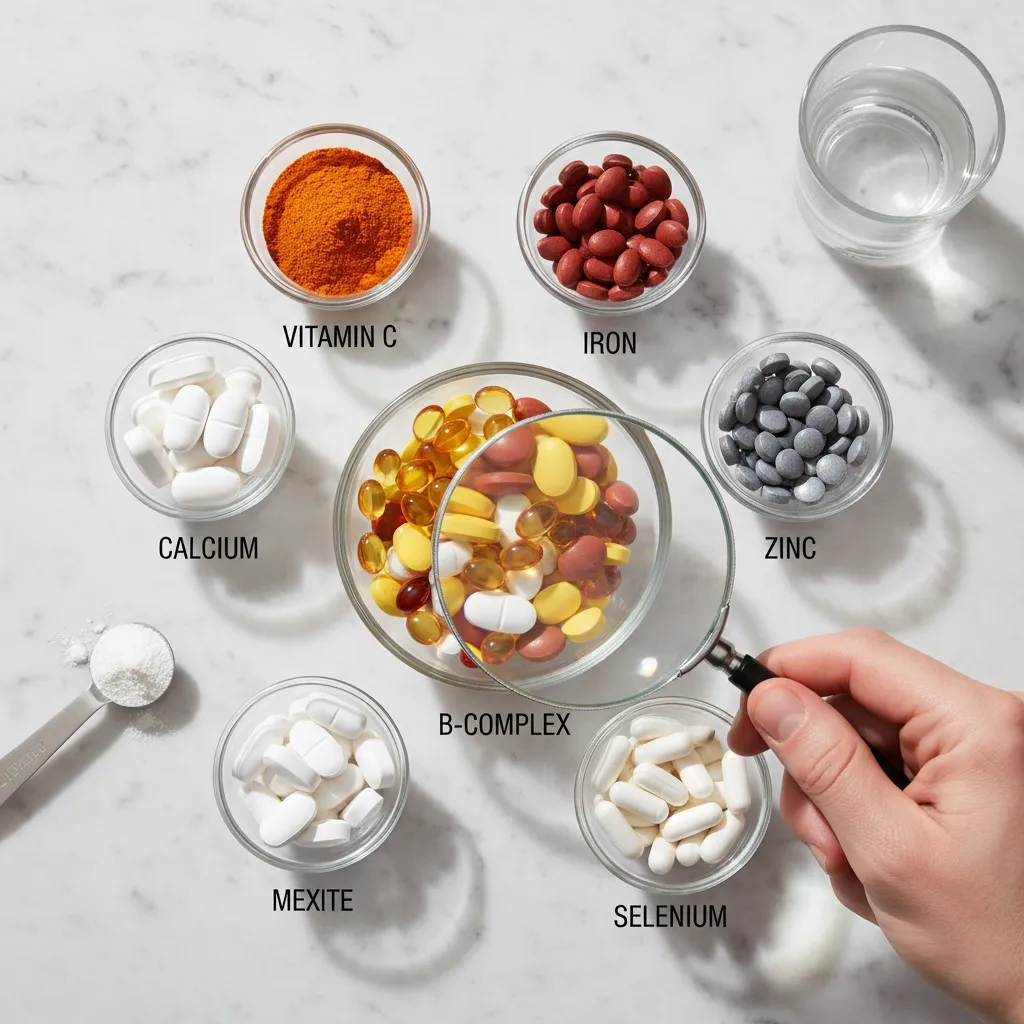


Images are for illustrative purposes only and do not represent the actual product. These are not official Herbalife product photos.
What Is a Multivitamin and Why Do You Probably Need One?
Learn why most adults have nutrient gaps, how a daily multivitamin can help, and what makes Herbalife Formula 2 Multivitamin Complex a smarter choice.
What Is a Multivitamin?
A multivitamin is a daily dietary supplement that combines essential vitamins and minerals into a single tablet, designed to fill the nutrient gaps that most diets leave behind. Rather than taking individual supplements for each nutrient your body needs, a multivitamin delivers a broad spectrum of micronutrients — typically 20 or more — in one dose. These include vitamins A, C, D, E, K, the B-complex group, and essential minerals like calcium, magnesium, zinc, iron, and selenium.
Multivitamins are not a replacement for healthy eating — they are nutritional insurance for the days when your plate falls short. According to the Centers for Disease Control and Prevention (CDC), fewer than 1 in 10 adults eat enough fruits and vegetables daily, making supplementation a practical strategy for millions of people.
Why Do Most People Have Nutrient Gaps?
Even people who try to eat well often fall short of recommended daily intakes for key vitamins and minerals. Here is why:
- Modern food processing — refining, cooking, and long-distance transportation strip nutrients from food before it reaches your plate. A fresh vegetable loses significant vitamin content within days of harvest
- Busy lifestyles — skipping meals, eating on the go, and relying on convenience foods reduce the variety and quality of nutrients consumed daily
- Soil depletion — decades of intensive farming have reduced the mineral content of crops. Studies show that fruits and vegetables today contain measurably less iron, calcium, and vitamin C than they did 50 years ago
- Dietary restrictions — vegetarian, vegan, dairy-free, or low-calorie diets can create specific nutrient gaps, particularly for vitamin B12, iron, calcium, and vitamin D
- Age-related changes — as you age, your body becomes less efficient at absorbing certain nutrients, including vitamin B12, calcium, and vitamin D
- Increased demand — stress, exercise, pregnancy, and illness all increase your body's demand for micronutrients beyond what a typical diet provides
Research published in the Journal of the American Medical Association has found that the majority of adults do not meet the recommended daily intake for several essential vitamins and minerals through diet alone.
How Can a Daily Multivitamin Help?
A quality multivitamin addresses the most common nutrient shortfalls in a single daily habit:
- Immune support — vitamins A, C, D, and zinc are critical for immune function. Deficiency in any one of these can weaken your body's ability to fight infections
- Energy metabolism — B-complex vitamins (B1, B2, B6, B12, niacin, pantothenic acid) help your body convert food into usable energy. Low B-vitamin levels are a common cause of unexplained fatigue
- Bone and muscle health — calcium, vitamin D, magnesium, and vitamin K work together to maintain strong bones and support normal muscle function
- Antioxidant protection — vitamins A, C, and E, along with selenium, protect your cells from oxidative damage caused by free radicals — a process linked to aging and chronic disease
- Mental clarity and mood — B-vitamins, magnesium, and iron support brain function, concentration, and emotional well-being
- Skin, hair, and nail health — biotin, zinc, vitamin C, and vitamin E contribute to healthy skin, strong nails, and vibrant hair
The key advantage of a multivitamin is consistency. Even on days when your diet is less than perfect, you are covering your nutritional bases.
What Makes Herbalife Formula 2 Multivitamin Complex Different?
Herbalife Formula 2 Multivitamin Complex is formulated by the Herbalife Nutrition Advisory Board — a panel of over 40 physicians, scientists, and nutrition researchers. It stands apart from many generic multivitamins in several important ways:
- Comprehensive formula — provides 21 essential micronutrients in a single tablet, including antioxidant vitamins A (as beta-carotene), C, and E, plus the full B-complex group, calcium, iron, and folic acid
- Science-backed dosing — each nutrient is included at levels designed to complement a balanced diet, not to provide mega-doses that your body cannot absorb
- Part of a system — Formula 2 is designed to work alongside Formula 1 Nutritional Shake and other Herbalife products as part of a complete daily nutrition program
- Gender-specific options — available in formulations optimized for men and women, with nutrients tailored to the distinct health needs of each
- Trusted manufacturing — produced under strict Good Manufacturing Practice (GMP) standards with full ingredient transparency and quality testing
- Convenient dosing — simple daily tablet format that integrates easily into any routine
Unlike many supermarket multivitamins that use cheap, poorly absorbed forms of nutrients, Herbalife Formula 2 is formulated with bioavailability in mind — meaning your body can actually use what you take.
Who Benefits from a Daily Multivitamin?
Virtually everyone can benefit from a well-formulated multivitamin, but some groups have an especially strong case:
- Busy professionals — inconsistent meals and high stress levels increase nutrient demand while reducing intake quality
- Active individuals and athletes — exercise increases the body's need for B-vitamins, magnesium, zinc, and antioxidants to support recovery and performance
- Adults over 50 — aging reduces nutrient absorption, particularly for vitamin B12, calcium, and vitamin D, making supplementation increasingly important
- People managing their weight — reduced calorie intake means fewer nutrients from food, making a multivitamin essential to prevent deficiency during weight management
- Vegetarians and vegans — plant-based diets can lack adequate vitamin B12, iron, zinc, and calcium without careful planning or supplementation
- Women of reproductive age — folic acid, iron, and calcium are particularly important for women, and many do not get enough through diet alone
- Frequent travelers — disrupted routines and limited food choices make it difficult to maintain consistent nutrient intake
If you eat a perfect, varied diet every single day, you may not need a multivitamin. But for the vast majority of people living real, busy lives, a daily multivitamin is one of the simplest and most effective health investments available.
Is a Multivitamin Right for You?
Consider whether any of these describe your current situation:
- You eat fewer than five servings of fruits and vegetables most days
- You skip breakfast or rely on coffee and pastries to start the day
- You feel fatigued or low on energy despite sleeping enough
- You get sick more often than you think you should
- You follow a restricted diet (low-calorie, vegetarian, dairy-free, or similar)
- You are over 40 and have not reviewed your nutrient intake recently
- You exercise regularly but do not supplement your diet
- You notice your skin, hair, or nails are not as healthy as they used to be
If even two or three of these apply, a daily multivitamin could be a meaningful addition to your routine. The goal is not to replace good food — it is to ensure that your body has everything it needs, every day, regardless of what ends up on your plate.
This article is for informational purposes only and does not constitute medical advice. Consult your healthcare provider before starting any new supplement.
Frequently Asked Questions
Can a multivitamin replace a healthy diet?
No. A multivitamin is designed to supplement your diet, not replace it. Whole foods provide fiber, phytonutrients, and other compounds that cannot be replicated in a tablet. Think of a multivitamin as nutritional insurance — it fills the gaps, but a varied diet of whole foods remains the foundation of good health.
When is the best time to take a multivitamin?
Take your multivitamin with a meal for best absorption. Food — especially food containing some healthy fat — helps your body absorb fat-soluble vitamins (A, D, E, K) more effectively. Many people find it easiest to take their multivitamin with breakfast to build a consistent daily habit.
Do multivitamins actually work, or are they a waste of money?
Research supports their value for people with nutrient gaps — which includes the majority of adults. A study published in The Journal of Nutrition found that daily multivitamin use significantly improved micronutrient status and reduced nutrient inadequacies. The key is choosing a well-formulated multivitamin with bioavailable nutrients at science-backed doses, rather than a cheap supplement with poorly absorbed ingredients.